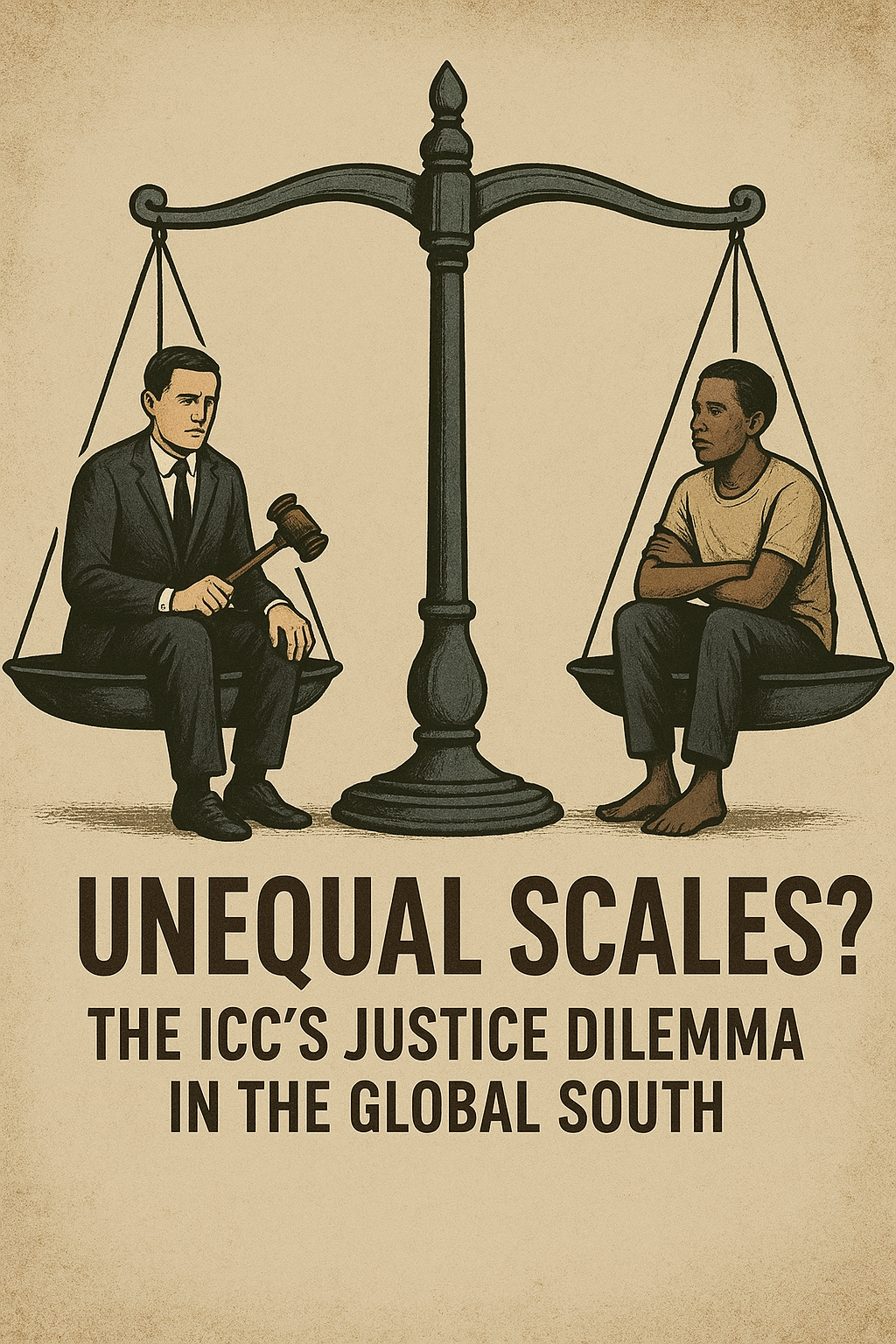
- Lorem ipsum dolor sit amet, consectetur adipiscing elit. Ut elit tellus, luctus nec ullamcorper mattis, pulvinar dapibus leo.
The mortal rights are n’t just legal entitlements; they’re the moral bedrock of a staid life. In
a nation as different, vibrant, and complex as India, the protection of mortal rights becomes
both a indigenous commitment and a practical necessity. The Indian Constitution, espoused
in 1950, is remarkable not only for its length and detail but for its deep perceptivity to the
essential quality of every human being. It weaves mortal rights into its veritably fabric —
occasionally explicitly, occasionally by recrimination, and frequently through judicial
interpretation that brings those rights alive with contemporary applicability.
A Constitution erected on the Foundation of Human Rights
When the Constituent Assembly was drafting the Constitution, India had just surfaced from
social rule marked by suppression and inequality. There was a clear resoluteness to insure
that no unborn government, no matter how important, could strip citizens of their quality
or liberty. As Dr. B.R. Ambedkar emphasised, the Constitution must be a “ social document ”
able of upping the weakest existent in the country.
Three pillars of the Constitution reflect this vision
1. Fundamental Rights( Part III) – the heart of India’s mortal rights frame.
2. Directive Principles of State Policy( Part IV) – guiding values for social and profitable
justice.
3. Abecedarian Duties( Part IVA) – reminding citizens that rights carry liabilities.
Together, these corridor produce the armature for a just and humane society.
Fundamental Rights The Core of Human Rights Protection
1. Right to Equality( Articles 14 – 18)
The right to equivalency ensures that every person — citizen or-non-citizen is entitled to
equal treatment before the law. It prohibits demarcation on the grounds of religion, race,
estate, coitus, or place of birth.
For a country historically divided by estate scales and socio- profitable difference, Articles
15 and 17 were revolutionary. Article 17’s invalidation of untouchability did further than
criminalise demarcation — it declared it unconstitutional, immoral, and inferior in a
ultramodern society.
Over the times, the Supreme Court has breathed life into equivalency justice. The idea of *
“ equal protection ” * evolved beyond treating everyone the same to feting and correcting
structural disadvantage. Reservations, defensive demarcation, and gender- grounded
reforms came naturally valid tools to produce an indifferent society.2. Right to Freedom( Article 19 – 22)
Freedom is the substance of mortal actuality, and the Constitution recognises it through a
cluster of vital liberties
▪ Freedom of speech and expression
▪ Freedom of movement
▪ Freedom to assemble peacefully
▪ Freedom to form associations
▪ Freedom to exercise any profession
Composition 19( 1)( a), which protects free speech, is particularly significant for a republic.
Courts have interpreted it to include the freedom of the press, the right to information,
cultural expression, and indeed online speech.
But the Constitution also acknowledges that absolute freedom can lead to chaos. thus, each
freedom comes with “ reasonable restrictions. ” The crucial word is * reasonable. * The bar
acts as the guardian, icing the government does n’t misuse these restrictions to silence
dissent.
3. Right to Life and Personal Liberty( Article 21)
still, it’s Composition 21, If there’s one provision that truly captures the spirit of mortal
rights in India. What began as a simple guarantee “ no person shall be deprived of his life or
particular liberty except according to procedure established by law ” has come the
foundation for a vast body of mortal rights justice.
Through progressive interpretation, Composition 21 now includes:
• Right to live with quality
• Right to sequestration
• Right to health
• Right to terrain
• Right to sanctum
• Right to legal aid
• Right to speedy trial
• Right against sexual importunity
• Right to sleep
• Right to reproductive choice
This metamorphosis is one of the most profound achievements of the Indian bar. It has
made Article 21 a living, breathing guarantee that adapts to ultramodern requirements.
4. Right Against Exploitation( Articles 23 – 24)These vittles cover individualities especially the vulnerable — from forced labour, mortal
trafficking, and child labour. Composition 23 prohibits any form of exploitation, while
Composition 24 specifically forbids the employment of children below 14 in dangerous
diligence.
Despite legal protections, exploitation continues in retired forms — domestic yoke, clicked
labour, dealing but the indigenous guarantee provides a important tool for activists and
courts to intermediate.
5. Freedom of Religion( Articles 25 – 28)
India’s denomination is unique it does n’t demand irreligion but equal respect for all faiths.
The Constitution ensures:
• Freedom of heart
• Freedom to profess, practice, and propagate religion
• Protection of nonage religious institutions
These rights promote harmony in an tremendously different country, indeed though
pressures sometimes face.
6. Cultural and Educational Rights( Articles 29 – 30)
India is home to hundreds of languages, societies, and traditions. The Constitution protects
the rights of nonages to conserve their culture and establish educational institutions. This
ensures that diversity, rather of getting a source of conflict, becomes a source of pride.
7. Right to indigenous Remedies( Composition 32)
frequently called the “ heart and soul of the Constitution ” by Dr. Ambedkar, Article 32
allows citizens to approach the Supreme Court directly when their rights are violated. This
ensures rights are n’t simply words on paper — they are enforceable.
Public interest action( PIL), innovated in the 1980s, expanded this right, allowing courts to
act on behalf of the marginalised who can not fight their own cases. Through PILs, the bar
addressed captivity conditions, clicked labour, environmental protection, and gender
injustice.
Directive Principles The Social and Economic Vision
While Fundamental Rights are enforceable, Directive Principles are not. Yet they hold
immense significance because they guide the state toward social and profitable justice.
These principles demand:
• Equal pay for equal work
• Universal education• Protection of the terrain
• Promotion of health and nutrition
• Welfare of marginalised communities
• Just and humane work conditions
Over time, courts have interpreted numerous Directive Principles as integral to
Composition 21, giving them enforceability by linking them to the right to life.
Judicial Activism Expanding the Horizon of Human Rights
The elaboration of mortal rights in India owes much to the bar. Through pathbreaking
judgments, courts expanded indigenous guarantees to address contemporary issues.
Some corner benefactions include:
• Maneka Gandhi v. Union of India( 1978) – Introduced the conception of “ due process
” into Composition 21, extensively widening its compass.
• Vishaka v. State of Rajasthan( 1997) – honored sexual importunity at the plant as a
violation of abecedarian rights.
• Justice K.S. Puttaswamy v. Union of India( 2017) – Declared the right to
sequestration as a abecedarian right.
• Navtej Singh Johar v. Union of India( 2018) – Decriminalized homosexuality and
upheld LGBTQ rights.
• Joseph Shine v. Union of India( 2018) – Struck down infidelity laws that treated
women as property.
These judgments illustrate how the Constitution evolves through interpretation, icing rights
are n’t locked in time but remain applicable to ultramodern society.
Strengths of India’s indigenous Human Rights Framework
1. Comprehensive and Progressive :
Many constitutions in the world include such an expansive list of rights combined with
guiding social principles. The Indian frame anticipates a wide range of freedoms — civil,
political, artistic, and indeed profitable.
2. A Strong and Independent Judiciary :
Courts play a critical part in guarding citizens from state overreach. Judicial activism has
turned the Constitution from a static document into a dynamic, evolving duty.
3. Mechanisms for Responsibility :
The vacuity of writ remedies, PILs, and judicial review ensures that state conduct remain
within the indigenous bounds.
4. Protection of nonages and Vulnerable GroupsBy explicitly addressing demarcation and guaranteeing artistic rights, the Constitution
safeguards pluralism and inclusivity.
Challenges and Limitations
Despite these robust protections, India faces significant challenges in realising mortal rights
completely.
1. perpetration Gaps :Laws live, but enforcement is weak. Police brutality, custodial deaths,
and detainments in the justice system remain burning enterprises.
2. Social walls : estate demarcation, gender inequality, and religious impulses still
undermine indigenous ideals, particularly in pastoral areas.
3. Abuse of Restrictive Laws : Certain laws — sedition( until lately), UAPA, preventative
detention — are occasionally used to check dissent, challenging the balance between
security and liberty.
4. Human Rights vs. National Security :Debates around sequestration, surveillance, and
data protection reflect the pressure between individual freedoms and state interests.
The Road Ahead Making the Constitution Truly Transformative
For the indigenous guarantee of mortal rights to achieve its full eventuality, India must
concentrate on:
• Strengthening institutions like the NHRC and SHRCs
• Police reforms to insure responsibility
• Faster judicial processes
• Lesser mortal rights education
• icing technology programs respect individual freedoms
• Empowering marginalised communities through social weal
• guarding digital rights in the age of AI and surveillance
Eventually, constitutions do n’t cover mortal rights — people do. Citizens, civil society, bar,
and government must work together to uphold indigenous values, especially in times of
conflict or polarisation.
Conclusion
The Indian Constitution is a important guardian of mortal rights. It articulates freedoms,
ensures equivalency, protects nonages, and provides mechanisms to challenge injustice. Its
strength lies not just in its textbook but in its rigidity — its capability to grow through
interpretation and respond to the evolving requirements of society.An honest appraisal shows both remarkable progress and moping challenges. Yet, the
indigenous commitment to mortal quality remains unvarying. The task ahead is to
consolidate this commitment in everyday life so that every existent, anyhow of estate,
gender, religion, or identity, gests the freedom and quality the Constitution pledges.
In numerous ways, the story of mortal rights in India is the story of India itself complex,
evolving, frequently tested, but driven by the imperturbable belief that every mortal being
deserves justice, liberty, and quality
divya patel
lovely Professional university