Mr. Anant Hooda
Research Scholar
Chaudhary Devi Lal University (CDLU)
- For decades, the Indian judicial system has been synonymous with two things: profound constitutional wisdom and a staggering mountain of pending cases. From the bustling hallways of the Supreme Court in Delhi to the remote District Courts in rural Odisha, the phrase “justice delayed is justice denied” is not just a legal maxim—it is a lived reality for millions struggling under a backlog that has now surpassed 50 million cases.
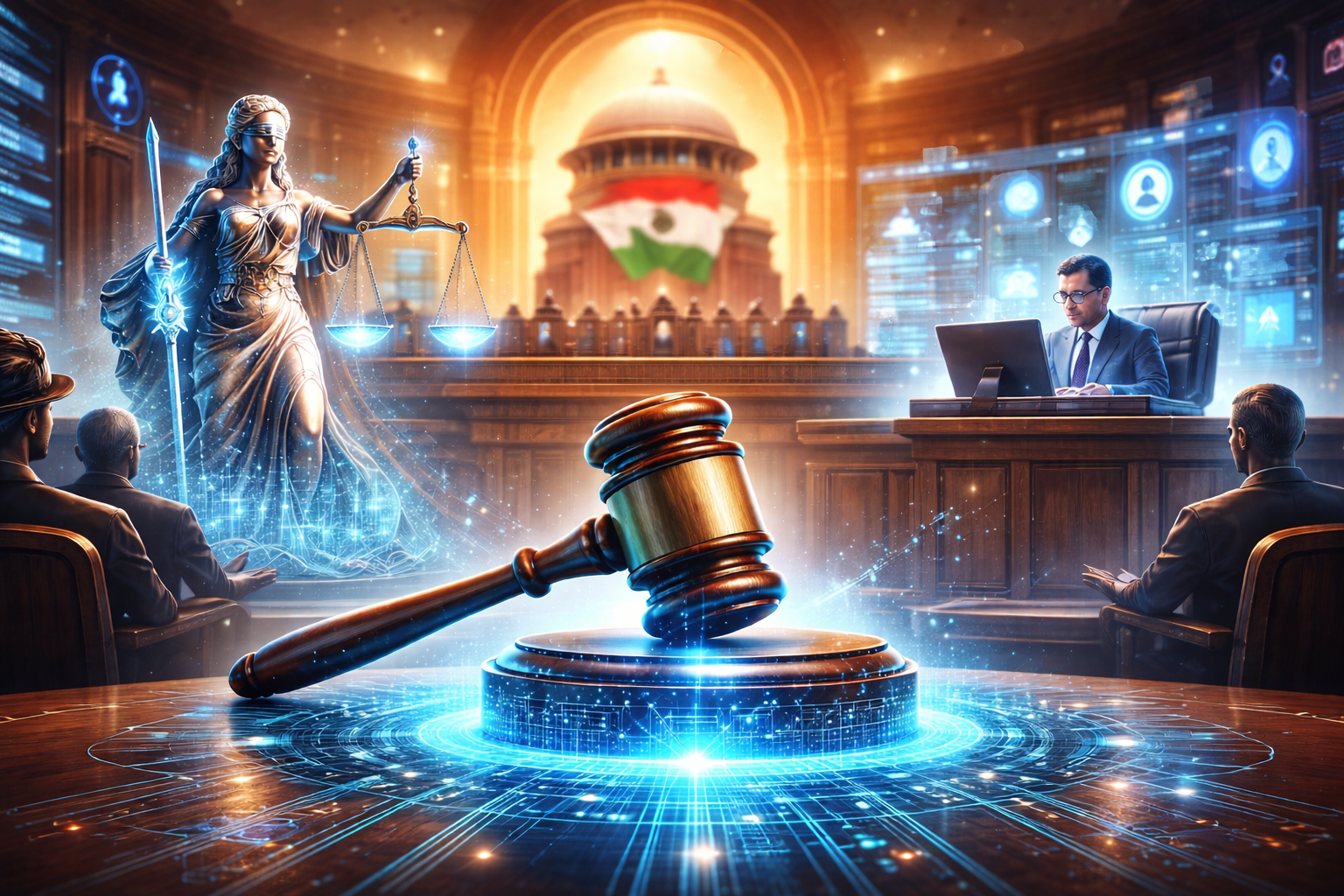
But a quiet revolution is brewing. As we navigate the early months of 2026, the “Digital India” initiative has reached the inner sanctum of the judiciary, marking a “reset moment” where technological innovation converges with an urgent imperative for reform. Artificial Intelligence (AI) is no longer a science-fiction trope; it is a digital clerk, a legal researcher, and a predictive tool already assisting in the administration of justice. However, as we hand over the keys of the courtroom to algorithms, we must ask: Are we trading the soul of justice for the speed of a processor?
The Indian Context: A System Under Pressure
To understand why India is so keen on AI, one only needs to look at the numbers. The human capacity to process, analyze, and adjudicate is stretched to its breaking point due to a chronic lack of judges and ever-increasing litigation. Estimates suggest that at the current pace, it would take human judges over 300 years to clear the existing backlog.
The Indian government and the Supreme Court have already taken proactive steps to address these inefficiencies through the e-Courts Project Phase III, which officially launched with a massive allocation of ₹7,210 crore. The judiciary is moving toward a regime of “maximum ease of justice” through paperless, digital, and online courts.
Current flagship AI initiatives include:
The Promises of an AI-Enhanced Judiciary
The integration of AI into litigation offers several benefits that align with the fundamental right to a fair trial, particularly the right to a “hearing within a reasonable time”.
1. Shattering the Backlog through Smart Management
AI-driven tools are now deployed for smart scheduling, case prioritization, and proactive backlog reduction. These systems use predictive analytics to forecast potential delays, ensuring that judicial resources are optimally allocated. For instance, AI can help club similar cases, such as Section 138 cheque bounce matters or traffic challans, which contribute significantly to pendency.
2. Transparency via Real-Time Transcription
One of the most visible changes is the transcription of oral arguments. AI speech recognition now enables near real-time transcription of proceedings, which is released on official platforms to enhance transparency and ensure record accuracy. This system is being gradually extended from Constitution Bench proceedings to regular hearing days.
3. Levelling the Playing Field in Legal Research
For lawyers, AI-driven platforms such as SCC Online have transformed research from hours of manual sifting into minutes of contextualized comprehension. These tools allow practitioners to ask legal questions in plain language, helping them focus on strategy and high-value advocacy rather than mechanical searches.
The Ethical Minefield: When Algorithms Hallucinate
Despite these benefits, the transition to “Algorithmic Justice” is fraught with peril. The right to a fair trial rests on pillars that a machine may not fully comprehend.
1. The “Black Box” Problem and Transparency
Modern AI models often operate as a “black box,” providing outputs without an internal logic that is easily explainable to human users. Under Indian law, judges must provide “reasoned orders”—clear explanations of their logic to ensure accountability. If an AI influences a verdict but its reasoning is ambiguous, judicial integrity is compromised.
2. Hallucinations and Fictitious Precedents
In February 2026, the Supreme Court flagged an “alarming” trend: lawyers citing non-existent case laws generated by AI. Justice Nagarathna recalled an instance where a lawyer cited a fictitious case titled “Mercy vs Mankind”. This phenomenon of “AI hallucination” poses a grave risk to the accuracy and truth that underpin the judicial process.
3. The Persistence of Bias
AI is only as fair as its training data. If historical datasets reflect prejudices, the AI could perpetuate or even amplify social hierarchies based on caste, religion, or economic status. Without strict regulatory controls and meticulous human oversight, these systems may entrench rather than eliminate discrimination.
The “Natural Judge” vs. The “Robot Judge”
In the Indian legal tradition, judicial power must remain with human judges who possess empathy, moral reasoning, and the ability to break from the past when justice demands it. The Supreme Court’s AI Committee has established clear boundaries: AI assists with administrative tasks but cannot draft judgments or make outcome predictions.
A major concern is “cognitive atrophy”. If judges become too reliant on AI-generated summaries and suggestions, their own critical thinking skills may deteriorate over time, turning them into “rubber stamps” for machine-driven outcomes. Furthermore, judicial independence demands that the judiciary—not the executive branch—controls the configuration of these tools.
Bridging the AI Divide
While AI promises greater access to justice, it risks widening the gap between tech-savvy urban populations and rural communities. With obstacles like low internet penetration and digital illiteracy in isolated locations, the benefits of digital services may not reach everyone equally. The “India AI Impact Summit 2026” specifically focused on democratizing AI to ensure it becomes an inclusive tool rather than a source of further inequality.
To maintain the “Equality of Arms” principle, AI initiatives must prioritize inclusive digital literacy and support for local languages. Projects building on Digital Public Infrastructure (DPI) are essential steps toward creating AI solutions tailored for all Indian citizens.
The Path Forward: Human-Centric Innovation
The gavel must remain in human hands. To safeguard our democracy, India’s approach to judicial AI in 2026 and beyond must prioritize:
AI can shine a light on the path to justice by reducing friction and delays, but the final judgment—the act of balancing law with human dignity—must always be a human one.
References